 Skip to content


The clinical quality of your practice is invisible to most patients until long after they leave. What they do notice — immediately, and viscerally — is your waiting room.
Before a patient has spoken to a receptionist, before they’ve seen you, before a single clinical interaction has taken place, they have already formed an impression of your practice. That impression is built entirely by their environment.
This is not a superficial concern. It has direct consequences for patient retention, referrals, and the long-term reputation of your practice.
First impressions happen in seconds
Environmental psychology research is consistent on this point: people assess the safety, competence, and warmth of a space within moments of entering it. In a healthcare context, that assessment runs deeper than aesthetics. Patients are often anxious, sometimes unwell, and in a position of vulnerability. What they see and feel in your waiting room either eases that anxiety or amplifies it.
A space that feels cluttered, dated, or poorly maintained communicates — unintentionally but powerfully — that attention to detail may not be a priority. A space that feels calm, considered, and clean communicates the opposite. Patients carry that feeling into the consultation and, more importantly, out of it.
What patients are actually responding to
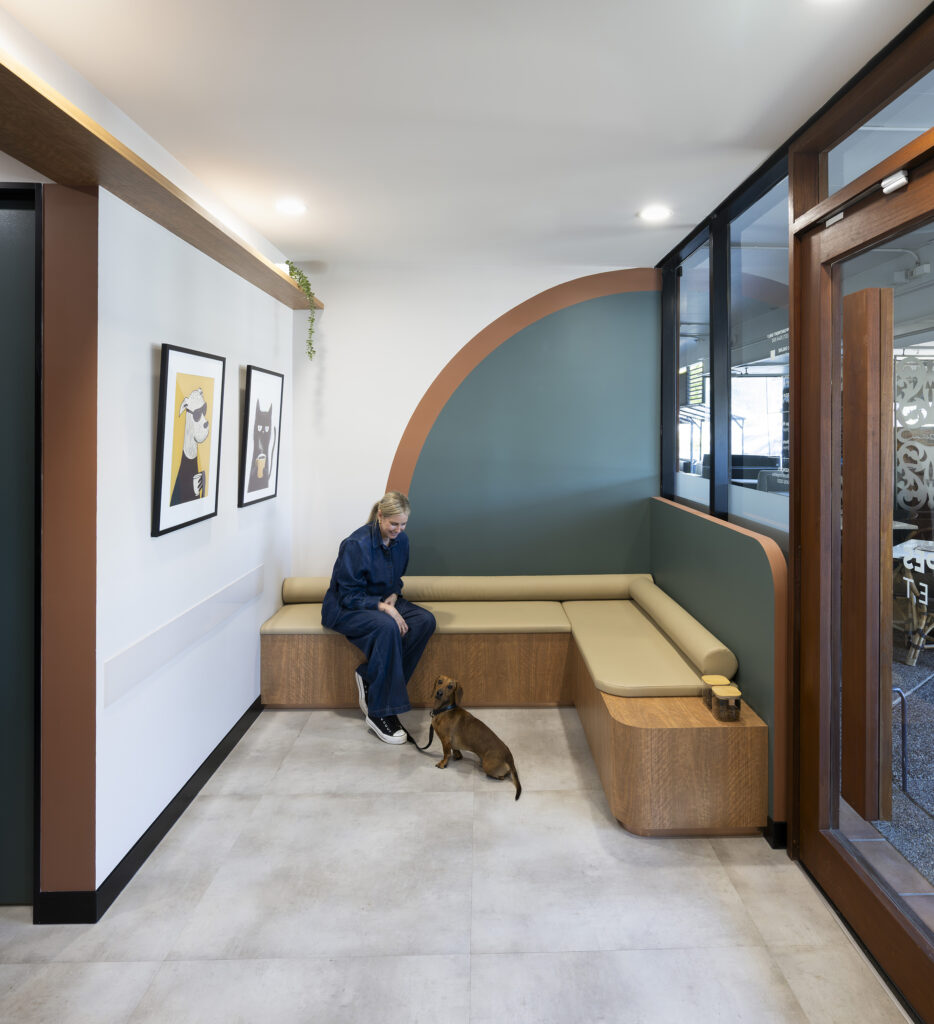
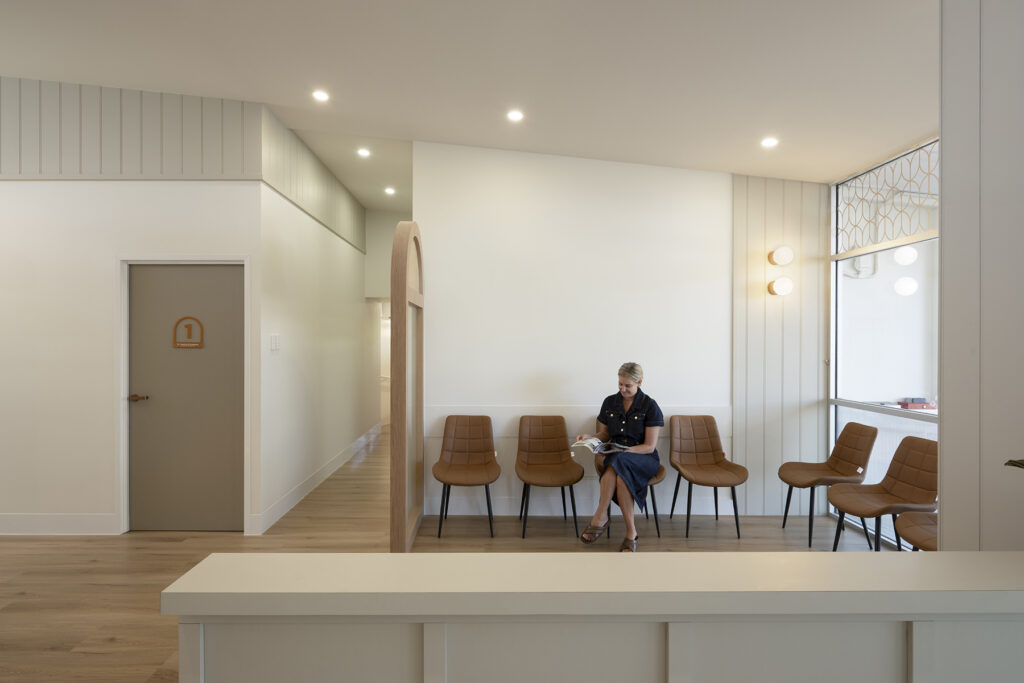
It is rarely one dramatic element that shapes a patient’s experience. It is the accumulation of small ones. Seating that feels appropriate for the patient demographic. Lighting that is neither harsh nor gloomy. A clear sightline to reception so they know they’ve been seen. Acoustic privacy so conversations at the desk aren’t audible across the room. A layout that feels orderly rather than congested.
Noise is particularly underestimated. A waiting room where patients can overhear clinical conversations, staff discussions, or the distress of another patient is a waiting room that creates discomfort — regardless of how good the clinical care is.
Wayfinding matters too. Patients who are unsure where to sit, where to check in, or which door to approach feel unsettled before the appointment has begun. Clarity in spatial design is a form of hospitality.
The retention connection
Patient retention is influenced by many factors — clinical outcomes, appointment availability, cost. But the experience of the physical space plays a more significant role than most practice owners account for. Studies of patient satisfaction in primary and specialist care consistently show that environmental factors — comfort, cleanliness, privacy, and calm — rank among the top drivers of whether a patient returns and whether they refer others.
A patient who felt comfortable in your waiting room is more likely to rebook. A patient who felt anxious, exposed, or out of place is more likely to shop around next time — and less likely to recommend you to a colleague or family member.
The good news
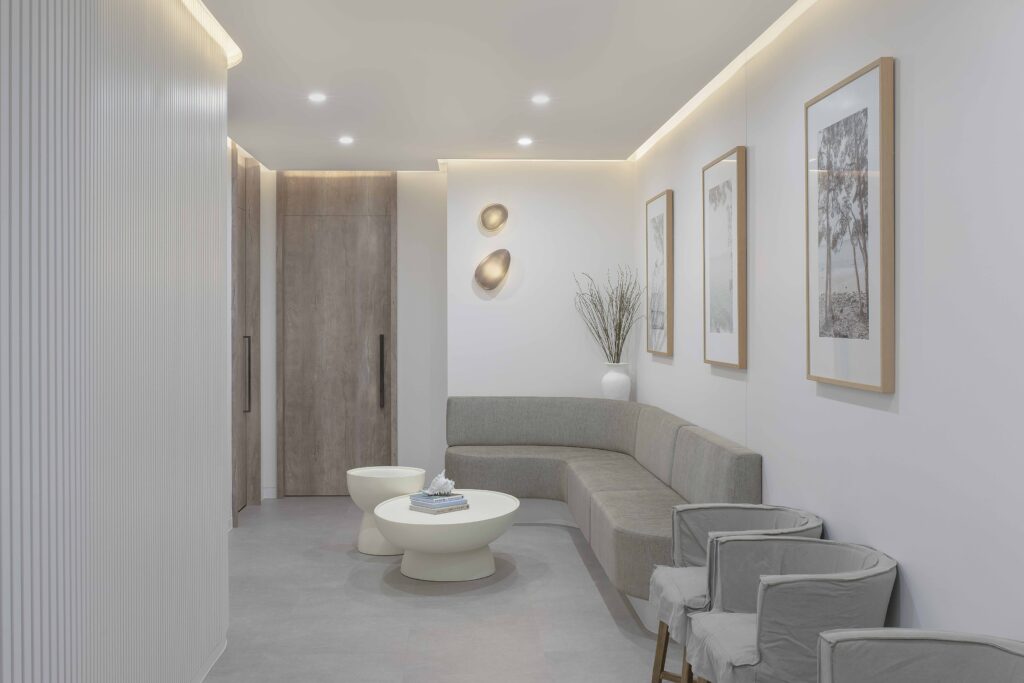
Most of the elements that shape waiting room experience are designable. They are not accidents of good luck. Lighting, acoustics, layout, materiality, wayfinding — these are decisions that can be made deliberately, with the patient’s journey in mind, before a space is built or refurbished.
The practices that get this right don’t necessarily spend more. They plan better. They consider the patient’s perspective at the design stage rather than retrofitting comfort after the fact.
If you’re planning a new practice or considering a refurbishment, it’s worth asking a simple question of whoever is designing your space: how have you thought about how a nervous patient experiences this room? The answer will tell you a great deal about whether that team understands what they’re actually building.
Because your waiting room isn’t just a room. It’s the first chapter of every patient’s experience in your care.
Start the conversation with our team today!
Elite D&C Projects has been designing and building healthcare practices for over 40 years, across medical, dental, specialist, aesthetic, veterinary, and radiology sectors. Elite works in Brisbane, Sunshine Coast, Gold Coast, Sydney, Melbourne and Adelaide.
Innovating Spaces. Inspiring Care.